Saturday, December 16, 2023

Hell Bent- The Extraction Chamber Scene

We are in the 8th anniversary of the Doctor Who episode Hell Bent. I hope to eventually write about Heaven Sent and Hell Bent together and really go into the themes of the Doctor/Clara arc. However, right now, I want to talk about certain scenes within Hell Bent that I love. These scenes really stand out to me, personally, and I want to make a post about each of them.

The first scene that I want to discuss is the Extraction Chamber scene. The Twelfth Doctor uses the extraction chamber to pull Clara to Gallifrey a second before her death.  He does this under the guise of needing information for the Hybrid.  Clara is very confused when she comes through the chamber door, and she starts to notice something very funny about her hearing. The General pushes Twelve to tell Clara what is happening, and Twelve eventually tells Clara that she's not hearing her heartbeat anymore.  The General proceeds to tell Clara that her death is a fixed point in Time, and therefore, it can't be changed.  You can start to see the anger in Twelve starting to boil over as the General is speaking to Clara. He then punches the General and takes his gun.  Twelve stares down the General  and declares:

"I will not let Clara die."

                                                                       ©BBC

Clara slowly approaches him, because she can see that he's on the edge. She takes his hand and tells him that she doesn't want this from him. However, he's not listening to her.  He has such a look of anger and determination on his face as he stares at the General.


                                                                               ©BBC

The General has a look of resignation on his face as he knows the Doctor is going to do it.  Then Twelve does it and pulls the trigger.  I love this scene, because you can see his anger building up before he goes into action.  He doesn't want to hear or face that Clara's death has to happen. The Universe needs her death to happen.  It's wonderfully acted by Peter Capaldi.

Wednesday, February 8, 2023

A Doctor Who Golden Moment: A Student Confronts Her Teacher

     The relationship between the Doctor and his Companion is the cornerstone or heart of Doctor Who. I think some of the strongest and most enjoyable seasons have a good Doctor/Companion relationship at its center.  I am a firm believer that one of the key facets of that relationship is a good confrontation scene. It really makes sense if you think about it, because we have individuals with vastly different life experiences. One member of the relationship has lived multiple lives and is over 1000 years old, and if we stick strictly to Revival Doctor Who, then the other member of the relationship is a human most likely under the age of 50. They shouldn’t see eye to eye in every situation.  The Companions shouldn’t always agree with the decisions the Doctor makes as their own biases, beliefs, and experiences would inform their perspectives.  These confrontations push the relationship forward.  It changes their relationship and brings a depth to it, because it creates understanding between the characters.  There have been quite a few great confrontation scenes, and I have chosen such a scene as my Golden Moment.  It’s from the S10 episode “Thin Ice.”

    Bill and the Doctor are in Victorian England where she has just witnessed someone die for the first time.  It wasn’t simply that it was the first death that she witnessed, but it was also the death of a child.  This shocking experience was compounded by the fact that her teacher and mentor appeared completely unfazed by what happened.  She wonders how many people he must have seen die that one more death is inconsequential to him.  He explains that he does care but he moves on.  Noticing a certain look in his eyes, she then goes deeper and asks if he’s ever killed anyone. After he tries to beat around the bush, she insists upon a simple yes or no answer.  He replies ‘yes,’ and she asks how many.  The Doctor doesn’t answer. He just stares at her, and she responds derisively “Let me guess. You’ve moved on.”   He tells her that if he doesn’t move on then more people will die. There are children still in danger that need their help. This argument between them helps Bill understand that it isn’t that the Doctor doesn’t care. It’s about the Doctor not wasting time wallowing or rending his clothes in anguish when he can do something productive to stop whatever is happening and at least save others.

    This scene, this argument, this confrontation helped make the relationship between the Doctor and Bill feel more real. There is more of an understanding between them, a connection, a common goal. It’s an important step in the growing depth of this relationship.  This is the reason it’s a golden moment for me.

                                                                            ©BBC

A Doctor Who Golden Moment: A Hug Between Friends

    The Twelfth Doctor was often described as grumpy during his first season.  He could appear very harsh on a surface level with attack eyebrows to round out the picture.  Physical affection was not within his comfort zone, and yet, the affection between the Doctor and his companion, Clara, was clear to see.  Scattered throughout the season were moments that highlighted the closeness of their relationship, and the episode ‘Listen’ contains such a moment.

    Listen is written by showrunner Steven Moffat, and it’s a very interesting and unique episode. It is entirely about the Doctor in search of a dream. Or nightmare.  The villain or monster of the episode isn’t an alien or a human.  The villain of this episode is fear. What’s hiding underneath your bed? That’s the question the Doctor is trying to answer.  The end of the episode finds Clara staring at the Doctor with a little bit more understanding due to the events of the episode. She slowly approaches him and gives him a hug.  Since physical intimacy is not in his comfort zone, the Doctor does not reciprocate the hug.  He bunches up and says:

“Not the hugging. No. No. I’m against the hugging. Please.”

    However, what is wonderful about this interaction is Clara’s response to the Doctor’s protestations.  She holds on tight while smiling and laughing as he tries to back away. It’s such a great moment because it is a glimpse into their friendship and relationship.  I believe you act this way with your best friend.  You act the way Clara does when you are very comfortable with the other person.  This moment shows there is affection and a bond between them even though the Doctor is uncomfortable with physical affection.  An unspoken love that can’t be denied. This is why this scene is a golden moment for me.


                                                                               ©BBC


Wednesday, December 16, 2020

War and Disillusionment: All Quiet On the Western Front


All Quiet On The Western Front (1930) is based on Erich Maria Remarque's book of the same name. It starred Lew Ayers, in one of his first starring roles, and Louis Wolheim. I personally think it is one of the best if not THE best anti-war film. It does a brilliant job of showing the horrors of war and how idealistic and patriotic men become disillusioned by those horrors. 

The story begins with Paul Bäumer and his fellow classmates on their final day of school. Their teacher, Kantorek, is rousing up their sense of patriotism. He tells them that there is no greater honor than to serve the Fatherland. They are the light of Germany. They are the heroes that will trounce the enemy. It is their duty and privilege to fight. We see the young men pressured to feel the honor to join the Army. The scene has intense close-ups of the teacher as he asks students what they will do. The close-up shows the pressure or rather the intensity of the pressure to agree to join the war. As the teacher pumps them up, the students start to feel good and proud about going to war. They cheerfully sing as they march to the Recruitment Office expecting to find glory and honor on the other side. When the group of students arrive at training camp, they find out that their Drill Sergeant is their former Postman, Himmelstoss. Himmelstoss loves the power and authority he now wields. He pushes the new recruits and enjoys making them perform humiliating exercises. After completing the training, the young Soldiers are sent to a unit near the front lines. They enter a barracks filled with only a few men. They find the place void of beds, and to their horror, they discover that food is also very scarce. There are no canteens near the front lines. They meet old-timer Kat, who takes the young soldiers under his wing and shows them how to survive life in the trenches. As time passes, the young soldiers become jaded and weary. Some lose their sanity due to the claustrophobia of trench life with the sounds of shells constantly exploding overhead. 

After the soldiers' time on the front lines, they are able to go to the Canteen. During this scene we are witness to a great conversation that highlights how war is waged by the people in power and not the people who are actually fighting. The soldiers talk about how they don't know the reason for the war, and that they feel no ill will towards their enemies. They don't want to kill the English or French, and they think the English and French soldiers probably feel the same way. These people hadn't even seen an Englishmen until they were face to face in battle. I always saw it as such an effective scene. Later in the movie, there is an incident that sort of piggy backs on this earlier scene. Paul is stuck in a foxhole when a French solider also drops in, and Paul stabs him. It takes all night for the Frenchman to die, and the sounds of his moaning torment Paul. When the Frenchman finally dies, Paul begs the man to forgive him. He tells the dead man that he would rather see him as a brother and not an enemy. He asks God why they were put in such a position.

One of my favorite scenes in the movie is a montage that follows a pair of boots. One of the students turned soldier is a young man named Kemmerich, and he owns a very nice pair of boots. When Kemmerich gets fatally wounded his boots are passed from one friend to another. As each owner dies, the boots move on to a different person. Through the journey of the boots, we can see how that group of young soldiers are dying one by one.

We really start to notice Paul's disillusionment when he returns home for R&R. He goes home and his mother wants him to be the same little boy he was before he left for war, but of course he can't be that boy anymore. He walks into his bedroom, and it feels like the room of a stranger. On his wall there are pinned butterflies in frames. It seems like a lifetime ago when his days were filled with catching butterflies with his sister. Paul meets with his father and his father's friends at the pub while at home. The older men pull out a map of the fighting area, and they tell Paul that the soldiers have to push through the enemy's lines and eventually make their way to Paris. Paul tries to tell them that life is different in the war zone. It may seem simple to push through but things are different out there. However, the older men don't listen. They dismiss him and tell him that he has no idea what he's talking about, even though he's been to the front. He realizes the futility of trying to talk to them, and so he silently sits and watches them talk about how the war will be won. Another day he walks by his school and hears his teacher once again trying to inspire students to join the war. He is again talking about the glory and honor of fighting for the Fatherland. When Paul enters the classroom, his teacher asks him to speak to the class and tell the kids what it means to serve the Fatherland. Paul is honest and tells the students that life in the trenches is hard, and all they do is try not to die and sometimes fail at that. He confronts the teacher about telling students that it's beautiful and sweet to die for your country when in reality it is dirty and painful. However, the teacher nor the students listen to him. The students even call him a coward and boo him. He realizes they can't see the truth and won't see it until they witness it for themselves.

Paul regrets going home. Away from the front lines, the people live in a bubble, and it's a bubble that he no longer fits in. When Paul returns to the frontlines, things are different there as well. He hardly recognizes anyone. The friends he joined the war with are either dead or in a hospital. Most of the soldiers he met when he first arrived at the frontlines are also gone. Dead or crazy. Paul finds out that old reliable Kat is still around and he went to look for food. Paul is happy to hear that and he rushes off to find him. Paul confides in Kat about no longer feeling as if he belongs back home and that Kat is really all he has now. As Kat and Paul are walking back to camp, a plane drops a bomb near them and Kat gets wounded. Paul starts to carry Kat to the Medic Tent when another bomb is dropped. Paul drops Kat off at the Medical Tent and is informed that Kat is dead. When we next see Paul, he is sitting in the trenches essentially alone even though he is surrounded by other soldiers. There is sense of despondency about him. He looks through the gun hole in the trench, and he spots a butterfly. In the midst of the barren field that is full of death and pain there was sign of life. A sign of nature's beauty in the form of a butterfly. A symbol of the carefree life he used to live before the War. As his hand reaches out to capture the butterfly, a shot rings out and Paul's hand falls lifeless.

The film ends with an image of a field full of graves. The images of the young students we met at the beginning of the film are transposed over it. These young men who were filled with life, idealism, and promise, now reside in graves.

"This story is neither an accusation nor a confession, and least of all an adventure, for death is not an adventure to those who stand face to face with it. It will try simply to tell of a generation of men who even though they may have escaped its shells, were destroyed by the war...."


Monday, August 24, 2020

An Unexpected Trip Through Time


In the Summer of 2019, I started on a journey through time.  This journey would take me from 2019 to 2014 to 2005 and all the way back to 1963. As the title states, this trip was unexpected. It was unexpected and very surprising, and it all began with a song.  

One day while driving my car, I heard a song that I found very catchy. The song turned out to be "Someone You Loved"  by Lewis Capaldi. I liked the song more and more each time I heard it. Then one day at home, I decided to listen to music on YouTube.  I searched for the Lewis Capaldi song and a particular video caught my attention. The thumbnail of the video had a face that seemed vaguely familiar to me. 

"Is that Peter Capaldi," I asked myself. It seems strange that I would even remotely recognize him since I never paid him much attention. I have a friend who is a big fan, and I came across some pictures of him on her Twitter timeline. How ever I came to recognize him doesn't matter. The important thing is that I did recognize him, because that is how my journey started.

I clicked play and watched a very moving video about organ donation, and as I watched the video one thought hit me from out of nowhere: Peter Capaldi could act. The emotions he displayed on his face throughout the video moved me so much. I felt the heartbreak of this character. 


I decided to check out more of his work. I remember my friend had mentioned Doctor Who in relation to Peter, so off I went to Amazon Prime. I did a search for "Peter Capaldi Doctor Who" and up it popped, and thankfully it was free!  I clicked play on the video and away I went. Deep Breath.

That was the name of the first episode- Deep Breath. Now, my original and sole purpose of watching this episode was to check out Peter Capaldi's acting. I had no pre-conceived notions about what I was about to watch. I had no expectations. I only wanted to see his acting.  As I watched the episode, I found myself laughing, because there was a lot of humor threaded throughout the episode.  I loved the dialogue and interactions between the characters. I was fairly intrigued by this character and his companion by the end of the episode.  I decided that I needed to see more of him.  The more episodes that I watched, the more I came to really like the character of the Doctor. He is completely fascinating!  I was incredibly moved by the relationship between the Doctor and his companion, Clara. The acting displayed between them was truly top notch, I thought.  When I reached the end of his Era, I was so incredibly impressed by what I had seen. There were episodes where the dialogue felt like poetry. It was beautiful. The relationship between the Doctor and his Companions was heartfelt, beautiful, and complex.  The character of Missy was wonderfully realized. The relationship between the Doctor and her was full of history and complexity. I didn't know anything about their history and yet I could feel it. I could sense it. It was tangible. The chemistry between the characters was strong. There was sci-fi, humor, and character drama woven throughout the episodes and seasons.  What about Peter Capaldi's performance specifically?

There was something about his performance that was central to everything in his era. He had gravitas, joy, and he could be scary and also have an almost child-like nature as well. He commanded the screen. It's strange but watching him felt like watching history. I came to realize at the end of Deep Breath that this character changes. Their appearance changes, however, it's still supposed to be the same person. The Doctor or who he used to be is still in him. As I watched Peter's seasons, I felt like I could see that there were others in him. He would talk or act a certain way that made me wonder if that's an older version coming to the surface.  He had the past in him. It made for an interesting watch. Also his character grew over the course of his seasons. He changed for the better. It was a remarkable character journey he went on that was fun to watch.

While I was watching his episodes/seasons, I was also watching interviews on Youtube.  I will be honest and say that I fell down a Capaldi hole. By watching these interviews and seeing when he was introduced as the Doctor, I realized that Deep Breath wasn't his first appearance as that character.  He appeared at the end of Time of the Doctor which meant I had to watch that episode. As I watched that episode, I realized that I need to go back to the beginning of the 11th Doctor's era so I could find out how he ended up where he did in that final episode. Thus began my journey with the 11th Doctor, and I quite enjoyed that one too. 

I thought that since I enjoyed the 12th Doctor and 11th Doctor, then I should go back to the first season. It felt like I was watching one big story.  Each Doctor leading to the next, and therefore I should start at the first season. On Amazon Prime when you go to Season 1, it's 2005 with the 9th Doctor. That started my journey with the 9th and 10th Doctor and I quite enjoyed them too. I discovered that I love the Doctor.  

As previously mentioned, I watched interviews with Peter Capaldi. During these interviews, he talked about the early Doctors.  He talked about the Doctors that started it all.   He exuded so much joy and passion as he spoke about the Classic series.  The way he spoke of them sparked a curiosity in me. I wanted to meet these Doctors and the monsters that he loved.   That took me to 1963 where I met the First Doctor.  Should I say met the First Doctor for the second time since I sort of met him in Twice Upon a Time?  Is this timey wimey wibbly wobbly?  Oh well! It's Doctor Who. When I watched the classic episodes, I discovered that I like the Doctors from the past as well.  It brings the history I felt in Peter's performance even more to life. It's amazing. It highlights his incredible performance as the Doctor.  When you find something new that you love, you want to share it with other people who love it too.  Fortunately, I was able to do that.  However, I found something else that really surprised me.

I found out that Peter's era wasn't that popular when it aired. I kept coming across this common theme: Great Doctor, Bad Writing.  I honestly was very flabbergasted by it.  I stated earlier that when I watched his episodes/seasons for the first time that I was very impressed and drawn in by them.  I don't understand why that theme started or why it's so persistent, because I just don't see it. However, opinions like mileage may vary. 

I will simply state in conclusion that Peter Capaldi is the reason I started to watch Doctor Who both Modern and Classic versions.  He captivated and mesmerized me with his performance. He will always be Doctor Who to me. 


Saturday, February 3, 2018

Stalag 17- A William Holden Centennial Celebration


WILLIAM HOLDEN: A CENTENNIAL CELEBRATION

STALAG 17 (1953) 

William Holden is a true Hollywood Legend.  He had a career that spanned over 40 years.  His movies jumped across the different genres.  On the screen he conveyed ruggedness, handsomeness, toughness, and cynicism.  His screen presence couldn't be denied.  He worked with some of the best actors of the Golden Age of Cinema (Gloria Swanson, Judy Holliday,  Barbara Stanwyck, Alec Guinness, and Humphrey Bogart) and he held his own. Many of his movies are considered true classics- Sunset Blvd, The Bridge On the River Kwai, Network, and Stalag 17 to name a small few. This April will mark his centennial birthday.  As part of a birthday celebration, I am going to discuss one of his most iconic movies, the previously mentioned Stalag 17.


Stalag 17 (1953)  is the movie that won William Holden the Academy Award for Best Actor.  Set in a German Prisoner of War Camp, the movie is filled with both intrigue and humor.  Holden plays POW SGT J.J. Sefton, a cynic.  He's a guy who has been a prisoner for some time and has learned how to navigate the ropes of Camp Life.  He's decided the best bet for him is to sit tight and make himself as comfortable as possible. No escape attempts for Sefton; the odds are too much of a long shot.  In order to make himself comfortable, Sefton has to trade and do business with the German Guards, with the enemy.  Of course, this does not make him popular with his fellow bunkhouse mates. 

The Intrigue in the movie comes by the German Guards  always being one step ahead of the Prisoners. The Guards seem to find out their plans and know of hidden contraband and tunnels.  How are the Guards always figuring things out? Is there a Spy among the group? Is an American actually ratting out fellow Americans? If so, who is this person?  Given Sefton's ability to trade with the Guards and gain privileges and benefits, he naturally becomes Suspect #1.  Is Sefton the traitor?  Of course he isn't, but I won't tell you who is the actual Spy.  Watch the movie!

The humor mainly comes from two of the Prisoners named Animal and Shapiro.  Animal is obsessed with Betty Grable, and his tears and mooning over Grable never fails to bring the laughs.  Be on the look-out for a funny scene between Shapiro and Animal during the Camp's Christmas celebration. 

Although the movie has a lot of humor, it also doesn't ignore the horrors of war.  It shows the horror in the form of a prisoner named Joey. He is a man shell-shocked who only finds comfort from playing an Ocarina.  The care and compassion that Joey receives from his bunk mates is very sweet to watch.

Stalag 17 was directed by the masterful Billy Wilder.  Along with Holden, it also features Otto Preminger, Don Taylor, and a young Peter Graves.   A great director, great cast, and a great story makes for one great movie watch.  In celebration of what would have been William Holden's 100th birthday, pop in Stalag 17 and have a cigar on Sefton.


Monday, August 15, 2016

Roddy McDowall- A Star Under the Summer Sky


Summer Under the Stars- Roddy McDowall

This article is for the Summer Under the Stars blogathon event.  On August 15th, Turner Classic Movies will be devoting 24 hours to Roddy McDowall.   He has had a career that spanned over 40 years with making the transition from child actor to adult actor.  This article will focus on the movie that put Roddy McDowall on the map and brought the world to his attention: How Green Was My Valley.


How Green Was My Valley (1941) was a John Ford masterpiece set in a poor Welsh mining town. It centers around the Morgan family.  Donald Crisp played the patriarch of the family. Sara Allgood played the matriarch of the family. Maureen O'Hara played the only daughter, Angharad.  And Roddy McDowall played the youngest son, Huw.  Walter Pidgeon also starred as the new town Preacher.

The movie is narrated by older Huw, and he tells the story of essentially becoming a man in the midst of a village dying and a changing family. Roddy McDowall was 12 years old when he played  the role of Huw Morgan, and he gave a brilliant performance full of sensitivity.    


Roddy McDowall is one of my favorite child actors of the classic film period, and his performance as Huw is the reason for it.  In the beginning of the film, Huw is treated as and seen as the baby of the family. He has no experience outside of life in his village. He has to be a bystander, an observer, as his family struggles and changes due to dangers of working in the mine and lack of fair pay by the mine owners.  Things start to change for Huw, when he attends a school in a different village. This school is full of more upper class children. At this school, Huw has to deal with a bullying classmate and a bullying teacher. The way Huw handles these situations has his family starting to see that he is becoming a man.

One of my favorite scenes with Roddy McDowall is when two of his elder brothers decided to leave for America for better prospects. Their mother leaves the dinner table heartbroken. It is only Huw and his father at the table. His father sits in silence with his head downcast. Huw gives a little cough, and his father says "Yes, my son. I know you are there." Huw smiles and continues eating his dinner.  His father's acknowledgement meant so much. It is a great scene between them.

Another scene was when Huw and his mother falls through ice into the freezing water.  After they are rescued, Huw overhears that his legs are frozen solid and he may never walk again. The look on that young boy's face, the look in his eyes....that was good acting from young McDowall.

Then there is the very last scene of the film.  Huw holds his father in his arms. There were no words spoken, and yet much was conveyed in McDowell's eyes.

His eyes. So much emotion, so much sensitivity and understanding seemed to be expressed in his eyes. That is what drew you to Roddy McDowell's performance as Huw Morgan and many other
performances.  He was a joy to watch as a child and he grew up continuing to be a fine actor and even
a great photographer.

On August 15, I hope people enjoy his performances that airs on TCM, and may newcomers come to
know of him.


2016 Summer Under the Stars Blogathon


Friday, August 5, 2016

Karl Malden- The Dependable One


This article is part of the 2016 Summer Under the Stars Blogathon.  For the month of August, Turner Classic Movies will devote a day to a particular star.  Friday August 5 is Karl Malden's Day.

 The subtitle of this article is "The Dependable One."  An apt description for Malden.  When you watch a movie that starred Karl Malden, there is little doubt that you will see a performance that grabs your attention and won't let go.  There is little doubt that he will stand toe to toe with some of the best actors of that time and still command the scene. There are many films that one can choose to highlight when talking about Karl Malden: On the Waterfront, Streetcar Named Desire, Gypsy, Baby Doll are just a few.    This blog post will focus his performance in On the Waterfront.


On the Waterfront (1954) was directed by Elia Kazan and is considered one of the best movies ever made.  There were many variables that has made On the Waterfront a classic not to be missed: the directing, the music, the film's atmosphere, the writing, and of course the acting.  The acting which included a memorable performance by Karl Malden.

On the Waterfront is about life on the docks.  It's about secrets. Loyalty. Snitching.  Standing up for your rights. Marlon Brando plays Terry.  He's a fairly simple, easy going dock worker who loves his pigeons and his brother, Charley (Rod Steiger).  The docks are run by a local thug, Johnny Friendly (Lee J. Cobb), who isn't afraid to resort to murder to keep control of those docks.  Terry has information on a murder that could help put Johnny away. His new girlfriend, Edie ( Eva Marie Saint),  happens to be the sister of the victim and wants him to speak out. However, in that neighborhood speaking up and out is snitching.  No one snitches.  No one wants to be a rat, especially Terry.  So  on one hand, Terry has his brother Charley, who works for Johnny, imploring him to keep his head down and his mouth shut. No surprise he also has Johnny Friendly stressing that it is important to his health to remain quiet.     And on the other hand he has his conscience and Edie telling him he has to do the right thing and tell on Johnny.  Not only does he have his conscience and Edie, he also has a Priest on his case.  Father Barry has made it his duty to help the dock workers find justice and have their God-given rights enforced.  The Father knows Terry  has something to say against Johnny Friendly, and he pushes Terry and shows Terry that he has a duty and a responsibility to speak. It's his job as a man to speak up.  So who plays this Priest?  None other than Karl Malden.


Karl Malden's Father Barry is a tough Priest. He doesn't do his job only in a church.  He goes out on the streets. He goes to the docks. Father Barry once said in regards to the Waterfront and Docks: "This is my church!"  He is committed to rallying the dock workers to stand up for themselves.  Testify against Johnny Friendly. He stands in a room with people booing him and throwing things at him, but he keeps speaking for what he knows is right.  He keeps standing up for the little guys.  In that memorable scene , Malden showed such passion and righteous anger as Father Barry. He portrayed that Priest to perfection.  He truly is  fantastic in this movie and absolutely commands the screen.  
 There is also a scene where he confronts Terry in a bar. He is telling Terry that if he truly wants to get Johnny Friendly, then the best way to do it is in a courtroom.  Terry says something derogatory and Father Barry knocks him to the ground.  Malden was so great in that scene!  He wasn't overshadowed.  He had such a strong presence. There was strength in his voice and in his body language in both scenes mentioned. 

Now it should be said, there are some extenuating circumstances connected to those scenes.  However, I won't share them, because  I don't want to spoil too much.  If you haven't seen this movie, then I recommend it to the highest degree. It is truly a brilliant film and Karl Malden is one of the reasons.

To go back to the beginning; you know to expect a great performance when you see Karl Malden is in a film. He didn't have the classical good look but he didn't need it.  There was power in his performances, and  he could do both drama and comedy.  He was a tremendously talented actor.  Truly one of the greats and definitely deserving of a day dedicated to him on Turner Classic Movies.


Sunday, July 10, 2016

Scarface: A Call To Arms


This entry is for the Hot and Bothered 1932  blogathon event.  As I was trying to think of a movie that premiered in 1932 an image popped into my head.   The image was of an opening credit statement. This statement was like a jolt to me when I first read it.  It is as follows:

"This picture is an indictment of gang rule in America and of the callous indifference of the government to this constantly increasing menace to our safety and our liberty. Every incident in this picture is the reproduction of an actual occurrence, and the purpose of this picture is to demand of the government: 'What are you going to do about it?'  The government is your government. What are YOU going to do about it?"

This damning statement...this essential call to arms appears in the opening credits of "Scarface."  When most people hear the name "Scarface" it is a good guess that the first thing or only thing they think of is the 1983 Brian De Palma film starring Al Pacino. That used to be the only film that would pop into my head.  It was a surprise to learn that the there was a 1932 version of this movie.  And it is obviously this earlier version that is the topic of this blog post.  It is this version that had the call to arms in the opening credits.

Scarface was produced by Howard Hughes and Howard Hawks, and it was co-directed by Hawks and Richard Rosson.  It starred Paul Muni, George Raft, Ann Dvorak, Osgood Perkins ( Anthony Perkins' father), and Boris Karloff.  The movie follows the rise and fall of Tony Camonte.  Tony has big dreams. He dreams of being top of the world.  Top of the gang world to be more precise.  His motto in achieving this dream is "to do it first, do it yourself, and keep on doing it." When he shares his philosophy, he points to his gun.  So you can infer that he means you pull the trigger first, you pull the trigger yourself, and you keep pulling it until no one stands in your way.  With this life philosophy, it isn't surprising that the world Tony inhabits is a very violent world, and the movie does not shy away in showing this violence.  The movie doesn't shy away in showing how that violence spills over and touches the lives of  the innocent bystanders outside that gang world.  We have scenes such as the main character walking into a hospital and shooting an adversary.  There are many scenes of drive by shootings from speeding cars with no care for a bystander that could be out on the street. We see a city terrorized by a gang war.  So it starts to become clear why there is a feeling of anger in the opening statement of the movie. It becomes clear why there is a demand for action. And what of our main character and those that inhabit his world?

As with many movies back in the 1930s, the gangster life doesn't have a happy ending.  Tony comes across as a bit of a psycho, who destroys the lives of the closest people to him. Even his own mother said "He hurts everyone." He is obsessed with his younger sister, Tessa, and hates the idea of her being with any man.  He is quick with the trigger.  Now that is a combination that doesn't bode well. Also he has the Cops after him, and he has enemies waiting to pump him full of lead every time he goes outside. I won't go into specific details as not to spoil too much.  This is a very good movie, and I highly recommend it.  Even though it premiered in 1932, I think modern audiences will find at least some aspects timeless.  There are present day cities still terrorized by violence with a call to action to end it. So immerse yourself into the crazy world of Tony Camonte, Scarface and see how the more things change, the more they stay the same.


Thursday, May 19, 2016

A First Time Attendee At Turner Classic Movies Film Festival 2016


Let me first say that Turner Classic Movies is my favorite channel.  It is the only channel where I feel I can bask in my love of classic films.  For the past seven years, TCM has put on a festival in Los Angeles for their fans.  At the festival, fans can go to screenings of numerous vintage films. Along with the films, festival goers  have opportunities to listen to the actors or writers or directors or any other person who played a part in bringing these films to life. 

So it shouldn't be a surprise that I have yearned to attend this festival.  However, there has always been a major barrier to my going: Money.   I simply felt I could not afford to spend the money no matter how much I knew I would have the time of my life.  When I joined Twitter, I found a community of fellow lovers of TCM and Classic Movies.  I would read their tweets and see their pictures of their time at that particular year's festival.  With every account I read, my heart would ache with missed opportunities.  Still, every year I kept telling myself that I could not go.

Then Maureen O'Hara attended the festival in 2014 and they screened one of my all time favorites, How Green Was My Valley.  I missed that year.  Then Maureen O' Hara passed away and I realized I had missed an opportunity to see in person one of my favorite actors at a screening of one of my favorite movies.  It hit me more than ever that these legends won't be around forever.  I can't keep letting opportunities pass me by. So I really started to save.  I made a promise to myself that I was going to attend 2016 Festival.


When passes for the festival went on sale, I bought the Classics Pass.  A fellow festival-goer recommended a hotel for me.  The hotel was in the perfect spot. I was within walking distance of all of the theaters.   I booked my flight.  As it came closer to my traveling to LA, I started to get nervous.  I couldn't believe I was going. I couldn't believe I actually spent so much already and I hadn't even gotten to LA yet. 


When I arrived in LA the nervousness went away.  My very first time in LA! I arrived the day before the festival officially started. I dropped off my bags and I started to walk around. Without even realizing it, I had found my way to Grauman's Chinese Theater. I saw the hand prints and foot prints of actors I have admired my whole life. I actually stumbled upon Harold Lloyd's prints and he is my favorite Silent Film Star.  I walked around that little area and read  the inscriptions and noticed the dates. The dates ranged from 1920s, 1930s and on and on til today. Amazing!


 I walked up and down Hollywood Blvd looking at the Walk of Fame. I found Spencer Tracy whom I have loved watching since I was 9 or 10 years old.  I walked around and looked at the people. Every person that I saw on the streets, I wondered if they were there for the festival as well. Were they just like me?  I made my way to Roosevelt Hotel. A smile broke out on my face when I saw the signs for the TCM Film Festival posted on the hotel.  I had arrived. I had truly arrived. I received an information packet which included a schedule.  Oh boy. That schedule.  Talk about making hard choices. There were so many interesting and rare films. Many playing at the same time. What to do? How to decide? I wanted to see everything.


The first evening of the festival, they showed "A Tree Grows in Brooklyn" with actor Ted Donaldson in attendance.  And following that was a screening of "Guess Who's Coming to Dinner" with Katharine Houghton in attendance.  Two of my favorite movies. One which starred Spencer Tracy.  And boy it was an absolute treat listening to these actors speak of their experiences in making their respective films.  In particular with Katharine Houghton.  Listening to her speak of her experience was an eye-opener for me.  I have seen this movie many times over, but I had never really stopped to think what it was like to actually film it during the late 1960s. Also I attended screenings that had guests Carl Reiner, Angela Lansbury, and Eva Marie Saint. Fantastic! These 3 legends are in their 90s and yet they were of clear and crisp mind. They were funny. So full of life.  With each guest interview I had the privilege to attend, I learned what it was like to make the movies that I have loved for years. I got to hear it with my own ears and see with my own eyes. In person.


During the Festival, I had the opportunity to attend a session on Vaudeville.  I saw clips of films that haven't been seen in over 80 years!  How incredible is that?!   It highlights the importance of preservation and restoration.  It would be a shame to forever lose this part of our history.

Also during this Festival, I had the opportunity to meet people who love these movies as much as I do. It was like we were in our own world during those 4 days.  I felt part of a tribe. It was a community and I loved being a part of it.

TCMFF 2016 will not be the last for me.  I have finally experienced it and now cannot stop at just one.


Wednesday, June 17, 2015

The Liebster Award

Stephen Reginald (@  Classic Movie Man ) nominated me for the Liebster Award.  This is the first time I've ever heard of this, but I feel honored that he thought of me!

So the rules are that I must answer 11 questions that my nominator composed to me, tell 11 things about myself that readers don't know,  nominate other bloggers and pose 11 questions to them.  So here we go!!!


1. Screwball Comedy, Film Noir, Musical or Western?
      Tough to answer. I love them all. But if I must choose then....Screwball Comedy.

2. Jean Harlow, Marilyn Monroe or Lana Turner?
        Got to go with Jean Harlow.


3. What film do you think is the most overrated of all time?
      Hmm...this is difficult to answer. If I had to choose, I guess I would pick "Slumdog Millionaire."

4. Who is your favorite film star and why?
          If I had to choose just one then it would be Spencer Tracy. He has captivated me since I was a young kid. He had a strong screen presence. He came across as such a natural.  He was versatile. And in his performance in "The Old Man and the Sea" he showed just how captivating he can be with only himself.

5. Do you have a favorite movie line? If so, what is it and what movie is it from?
           My favorite line comes from "How Green Was My Valley." The quote in the movie is part of the narration that originally came from the book the movie is based on. The narrator says "Men like my father cannot die. They are with me still, real in memory as they were in flesh. Loving and beloved forever. How green was my valley then."

6. Cheesecake, apple pie or hot fudge sundae?
       Ack! The most difficult question to answer! Chocolate Mousse cheesecake.

7. What movie star’s work do you think should get more attention?
          I wish today's generation would learn of Myrna Loy and watch her work.


8. What was the first film you remember seeing in a movie theater?
         I think it was My Little Pony. LOL

9. How old were you when you realized you loved movies?
       I think I was 9 years old when I realized movies were more than just simple means of entertainment to me.

10. What is the best novel-to-screen adaptation, in your opinion?
           "To Kill a Mockingbird" hands down.


11. Is there a movie you haven’t seen that would surprise us?
           "Camille."  I want to see it, but something always seems to prevent it.                                                                                                                                                                                                                                                                                                                                                                                                                                     
11 Things Readers May Not Know About Me:

              1. I speak Russian
              2. I'm learning to play piano and harmonica
              3. I attempted to learn to play Rugby once.
              4. I studied abroad in Russia for 3 months.
              5. I went to University of Virginia
              6. "All Quiet on the Western Front" and "Brideshead Revisited" are two of my favorite books.
              7. I once dressed up as Charlie Chaplin for Halloween.
              8. On my college dorm wall, I had a poster of Spencer Tracy.
              9. Eggplant parmesan is one of my favorite dishes.
              10. Superman was my favorite superhero as a kid.
              11. West Side Story was the first soundtrack I bought.                                                                                                                               

Tuesday, November 18, 2014

Charles Coburn: What a Character!


WHAT A CHARACTER: Charles Coburn

Every fan of classic films should know the face of Charles Coburn if not the name.   He has appeared in many films usually portraying elderly authority figures.  He was born in Macon, Georgia in 1877.  He spent the majority of his career performing on stage.  In fact, he did not begin his film career until he was in his 60s.    Many of Coburn's well known films were comedies.  Some of his most memorable comedic roles were in the following:

The Lady Eve (1941):


Coburn portrayed Barbara Stanwyck's father, "Colonel" Harrington.  Harrington is a con man card shark who taught his daughter well the art of fleecing unsuspecting marks. They set their eyes on naïve Charles Pike(Henry Fonda) as their next mark.  How disappointing for professional con  Harrington when his daughter ends up falling in love with Charles Pike and protects Pike from her father’s card tricks?


George Washington Slept Here (1942):


Coburn played Connie Fuller's (Anne Sheridan) rich uncle Stanley.  Whenever he arrives for a visit Connie and husband, Bill (Jack Benny), are sure to cover the living room with numerous pictures of good old Uncle Stanley.  After all, they want to make sure rich Uncle Stanley knows just how much they love him. In dire need of money to save their home, the Fullers turn to Stanley who is their only hope.  Imagine their shock when they discover all is not as it seems with Uncle Stanley’s fortune.

The More The Merrier (1943): 


In his Academy Award Winning role for Best Supporting Actor, Coburn portrayed millionaire Benjamin Dingle.  Dingle arrives in Washington DC as an Advisor on how to handle the housing shortage during WWII.  However when he arrives in DC, he discovers his hotel room isn't ready.  He answers the ad of Connie Milligan(Jean Arthur), who is seeking a roommate.  She sublets him half of her apartment, and they have to learn how to live in this shared space despite having different personalities.  Things get even more complicated( and funny) when Dingle sublets half of his half to Sgt. Joe Carter (Joel McCrea).

Comedy may be the genre Coburn had the most roles, however that does not mean he didn't foray into other film types.  In fact, one of his most memorable roles is in the drama "King's Row."

King's Row (1942):
In this movie, Coburn portrayed sadistic doctor Henry Gordon. Dr. Gordon is rumored to perform surgery without anesthesia.  His daughter, Louise(Nancy Colman) is in a relationship with rich boy Drake(Ronald Reagan).   When Drake's fortune is stolen, he goes to work on the railroad. When he gets injured, vindictive and sadistic Gordon needlessly amputates both of Drake's legs out of hatred.  This was a far cry from the harmless, lovable characters he was known for playing.

In each of the films listed and many more unlisted, Coburn had a presence about him.   He was a familiar face that audiences loved to see. Even fans of today get a real pleasure from his performances.  A character actor that was always reliable to bring out the best. 


Monday, July 14, 2014

Real in Memory As In Flesh....How Green Was My Valley

"How Green Was My Valley" is a John Ford masterpiece.   It premiered in 1941 and became a successful and popular film. It beat out "Citizen Kane" for Best Picture.  It boasts of a great cast with Walter Pidgeon, Maureen O'Hara, Donald Crisp, and Roddy McDowall in his first major feature film.

Now when I think about this movie, one word stands in the forefront of my mind: Memory. The life that is found within a memory.   The film begins in a dying town. A town that was stripped of its life by the coal mine. A faceless man is packing his belongings in preparation to leave this barren land.  As he is packing, he shares that he can close his eyes and see the town as it used to be.  A town full of life, song, and green.  He can clearly see the faces of his mother and sister as they prepare the evening meal. He can see the faces of his brothers and the townsmen as they leave the mines to walk home with a song on their lips.  He can see the face of his father as they take their custom walk through the fields and around town. I imagine he could still feel his father's hand as he holds it during their walk.

As the faceless man, Huw, walks down memory lane, the audience gets to see the town and people change over the years.  We see people getting married and leaving town.  We see people forced to leave town to find better work.  We see the mine killing people. We see the hypocrisy and lack of compassion of Man. We see Huw growing up and becoming a man.

As things change over the years, some things never changed for Huw.  The love of his mother and father remained central and never changing.  And when his father was killed at the mine, Huw said a line that really said it all: Men like my father cannot die. They are with me still, real in memory as they were in flesh, loving and beloved forever."   In our memories people can't die. Places don't die.  Huw could still remember the green of his Valley. He could still remember his father as he once was.  Life is in the memory.  How Green Was My Valley then.......


Saturday, May 31, 2014

Clint Eastwood: From Rowdy Yates To Dirty Harry To Unforgiven

A Birthday Post


Today is Clint Eastwood's 84th birthday.  So in celebration we will explore some of his legendary career.  Mr. Eastwood has been part of the Hollywood Landscape for over 50 years, and he has remained a favorite amongst all generations.   We begin our journey on the cattle trail.

Rawhide (1959)


Rawhide was a show about life on a cattle trail. Clint Eastwood portrayed cattle driver Rowdy Yates, and this role was his first big break.  Rowdy was considered a young inexperienced handsome hot head.  He portrayed this character for 8 seasons and it made him a television star. 

The Man With No Name (1964)


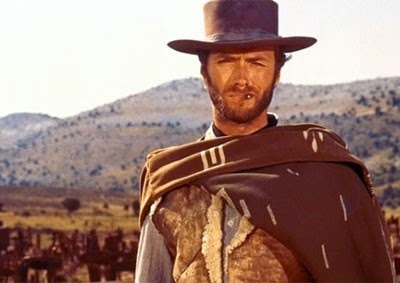
The Man With No Name is a trilogy of Spaghetti Westerns that began with "A Fistful of Dollars" in 1964.  The trilogy included "For a Few Dollars More" and "The Good, The Bad, and the Ugly."  These movies broke the Rawhide image and began a new phase in Clint Eastwood's career: the anti hero.  In these westerns Clint portrayed The Stranger.  His character had no name. He was mysterious. Tough. Deadly with a gun. 

Dirty Harry (1971)


In the Dirty Harry series, Clint Eastwood portrayed Harry Callahan.  The series consisted of "Dirty Harry," "Magnum Force," "The Enforcer," "Sudden Impact," and "The Dead Pool."  Harry was a cop whom as the title suggests wasn't afraid to get dirty.  He did what he thought was necessary to get the bad guys.  It could be argued that the Dirty Harry movies solidified Eastwood as the classic anti-hero of his time.  Callahan was a man for whom the audience cheered, even though he didn't behave as the classically good guy cop. He had memorable lines that people still quote to this day. If you walk up to anyone on the street, they may not know much about guns, but they would probably know Harry Callahan's gun.

Play Misty For Me (1971)


This film marked Clint Eastwood's directorial film debut. He played radio jockey Dave Garver who found himself dealing with an obsessed stalker. The title of the film refers to the stalker, Evelyn, frequently calling to request the song "Misty."  The film was received very well and it began Clint's journey as a successful director. 

Unforgiven (1992)


This is a big leap from the 1970s to the 1990s.  I am choosing to end with "Unforgiven," because this was my first introduction to Clint Eastwood as a director.    Also, this movie is considered by many to have revitalized the western genre. Therefore, I thought it would be fitting to end it on this film. 
 In the movie, Eastwood portrays William Munny. He is a man repenting the sins of his youth. A reformed murderer who has hung up his guns. He is convinced to help bring to justice men who had disfigured a female prostitute since the local sheriff is crooked.  Since it has been many years that he has done anything of that nature, he is rusty with a gun and with riding a horse.   It was hard for many in the audience to see Eastwood portray a man falling off a horse and not even able to shoot a gun anymore.  However, watching Eastwood portray a man struggling to not fall back into old habits, but also be able to do what needs to be done resonated with a lot of people.  

Clint Eastwood is one of the few Legends that are still around. He is still active today with acting and directing.  He is also a musician who has composed the musical score for some of his films.  A talented man that we hope continues to influence and make movies for years to come. 

Happy Birthday, Mr. Eastwood. You have truly made our day.